

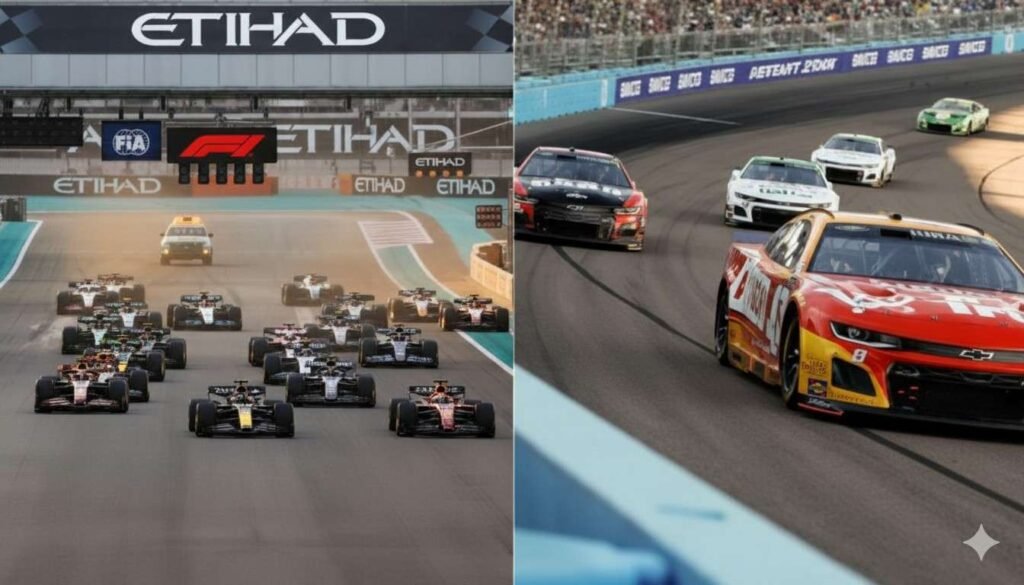
Formula 1 and NASCAR are two of the most popular motorsport racing series in the world. Both attract millions of fans, but they offer very different styles of auto racing. Because of this, the debate around Formula 1 vs NASCAR continues to grow.
At first glance, Formula One racing focuses on speed, advanced technology, and global circuits. In contrast, NASCAR stock car racing is known for close competition and intense wheel to wheel action. As a result, each series creates a unique racing experience for fans.
Moreover, the comparison between F1 and NASCAR is not just about cars or tracks.
Origins and Evolution of Formula 1 and NASCAR
Formula 1 began in Europe in 1950 as a global motorsport championship focused on speed and advanced engineering. Meanwhile, NASCAR started in the United States with roots in stock Auto racing and oval track competitions. Over time, both series grew into top level racing sports with massive fan followings worldwide.
However, the evolution of Formula One racing centered on technology, aerodynamics, and international expansion. In contrast, NASCAR motorsport focused more on close racing, driver skill, and American racing culture. As a result, Formula 1 and NASCAR developed unique identities within the world of professional auto racing.
Design and Engineering
Car Structure and Design Philosophy
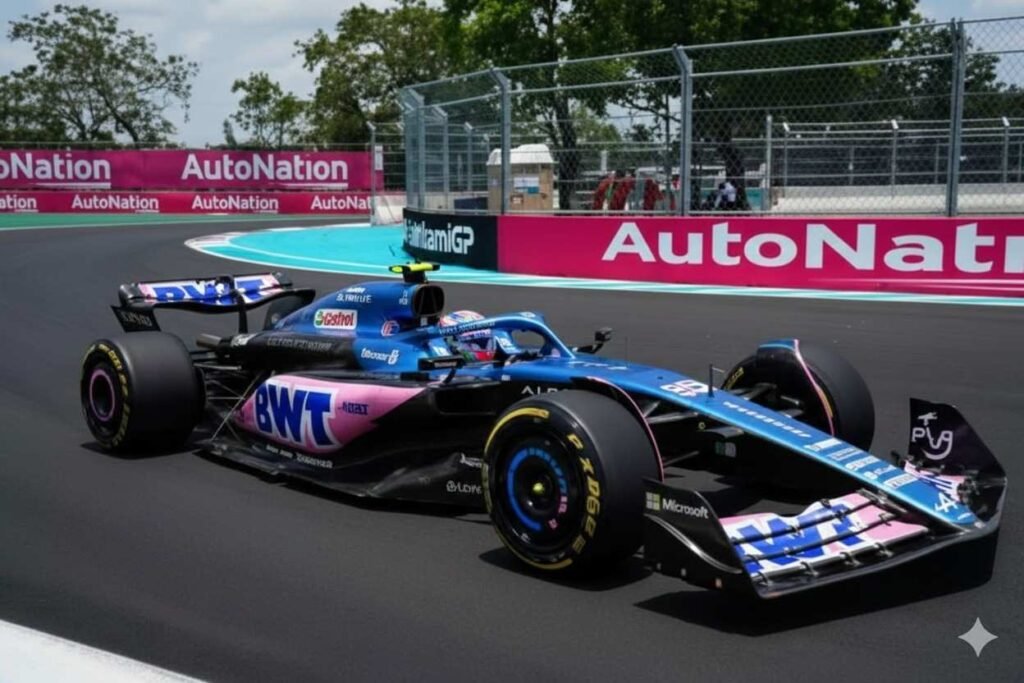
First of all, Formula 1 cars are open wheel machines designed with a strong focus on aerodynamics and lightweight materials. In contrast, NASCAR stock cars feature a closed body design built for durability and wheel to wheel racing
Engine Power, Weight, and Acceleration
On the other hand, Formula 1 engines use advanced V6 hybrid technology with energy recovery systems. Meanwhile, NASCAR engines rely on naturally aspirated V8 engines that produce raw power. Therefore, F1 cars accelerate quicker, whereas NASCAR cars maintain strong speed over longer distances.
Aerodynamics, Downforce, and Performance
Most importantly, aerodynamics and downforce play a vital role in Formula 1 racing performance. However, NASCAR cars depend more on drafting and drag management on high speed tracks. Because of this difference, F1 cars dominate corners, while NASCAR cars excel in pack racing situations.
Technology and Innovation in Formula 1 vs. NASCAR
Formula 1 is known for advanced racing technology and constant innovation. It uses hybrid power units, energy recovery systems, and heavy data analysis. As a result, teams focus on efficiency, speed, and long term performance.
On the other hand, NASCAR follows a controlled technology model to keep racing close. Cars are more standardized, so driver skill and team strategy matter more. Therefore, innovation is limited to setup, aerodynamics balance, and pit strategy.
Moreover, technology influences race strategy in both sports. F1 teams rely on simulations, sensors, and real-time data. Meanwhile, NASCAR teams use experience, communication, and smart decisions during cautions and restarts.
The Tracks
Track Varieties NASCAR Vs Formula 1
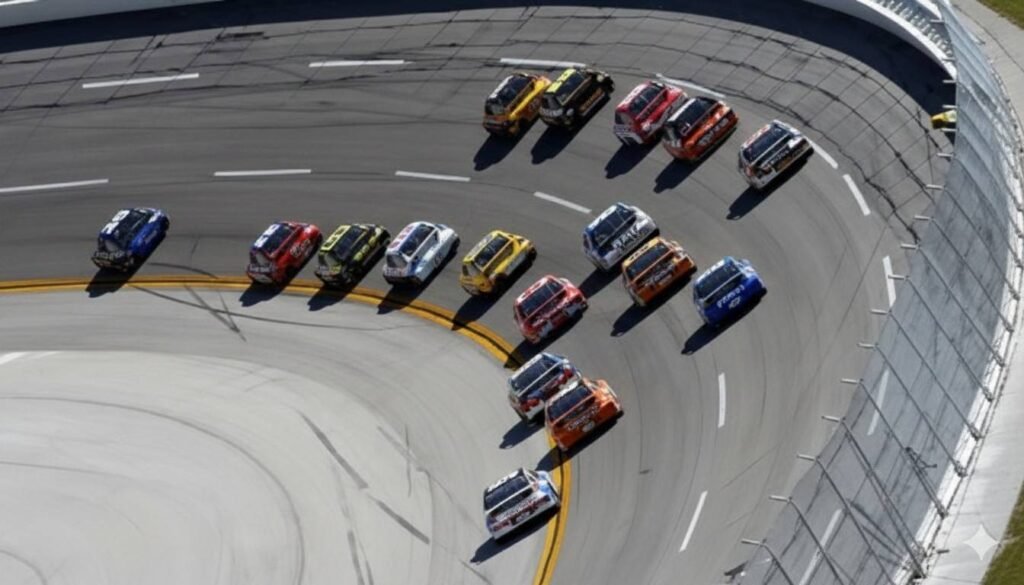
Formula 1 tracks include road circuits and street courses with tight corners and elevation changes.These tracks require precision driving, quick reflexes, and perfect braking. On the other hand, NASCAR tracks mainly use ovals, superspeedways, and short circuits for high speed racing.
Geographic Distribution
Formula 1 races are held worldwide, from Europe to Asia and the Americas. In contrast, NASCAR is mostly based in the USA, though it occasionally visits Canada or México. Thus, F1 vs NASCAR fans experience very different global racing cultures.
Signature Features
F1 circuits often have technical sections, chicanes, and sharp hairpins for strategy and skill.
NASCAR tracks focus on drafting, pack racing, and long straight away to keep speed high.
Therefore, the track design greatly influences the racing style and driver approach.
Racing Style and On Track Action Comparison
Overtaking and Racecraft
In Formula 1, overtaking often depends on precision and timing. Drivers use DRS zones and braking points to pass safely. On the other hand, NASCAR racing relies on drafting and pack dynamics, where cars stay close to gain speed.
In NASCAR, restarts after caution periods create sudden opportunities to overtake. Meanwhile, F1 drivers carefully plan each move on road and street circuits. Both series test driver skill, but the style of racing is very different.
Race Strategy and Pit Stops
Strategy is crucial in Formula 1, where tyre management and fuel play a major role. Teams plan pit stops carefully to gain seconds and improve position. Conversely, NASCAR pit stops are faster but less frequent, often happening during caution periods.
Additionally, F1 drivers adapt to changing weather and track conditions, while NASCAR crews adjust for long races on ovals. Both sports demand quick thinking and teamwork, but the approach to strategy is unique.
Rules and Regulations
Technical Rules
Formula 1 cars follow strict technical regulations to ensure fairness and safety. Each team must meet limits on engine power, car weight, and aerodynamics. In contrast, NASCAR enforces standardized car designs to keep competition close.
Race Conduct
During races, F1 drivers must follow rules about track limits, safety cars, and pit stops. Meanwhile, NASCAR has unique rules for restarts, drafting, and caution periods. These differences shape how drivers plan their race strategies.
Team Operations
Teams in Formula 1 can adjust setups and use advanced telemetry to gain an advantage. On the other hand, NASCAR teams operate under controlled update, focusing on consistency over tech innovation. Both styles require teamwork and strategic decision making.
Penalties and Stewarding
F1 has a detailed system of penalties for unsafe driving or technical violations. NASCAR also penalizes rule breaches but often emphasizes on track race incidents. Understanding these rules is crucial for fans and new drivers alike.
In Race Adjustments
Formula 1 allows some in race adjustments like tyre pressure and wing angles. Conversely, NASCAR has strict limits on what can be changed during pit stops. This difference affects race tactics and how teams plan their strategies.
Driver Skills and Physical Demands
Skills Required for NASCAR Drivers
NASCAR drivers need excellent car control because races are often close and high speed. They must master drafting, braking, and cornering on oval tracks. Moreover, mental focus is vital for long races to avoid mistakes and accidents.
NASCAR racers also rely on strong decision making skills during pit stops and restarts. They must quickly react to changing track conditions. Therefore, experience and strategy are as important as raw speed.
Consistency is another key factor for NASCAR drivers. They need to maintain lap times under pressure. In addition, teamwork with the crew and engineers helps improve performance throughout the season.
Skills Required for Formula 1 Drivers
Formula 1 drivers require precision and agility because cars respond extremely quickly. They must control high speed cornering, braking, and acceleration with accuracy. Consequently, even small mistakes can affect race results.
Physical fitness is crucial for F1 racers due to high G forces in corners and braking zones. Strong neck, core, and arm muscles help maintain focus. Also, endurance ensures consistent performance during long races.
F1 drivers must make instant decisions on tire strategy, overtaking, and car setup. Quick thinking under pressure separates good drivers from champions. Furthermore, mental toughness helps them handle both wins and losses calmly.
Safety Standards and Accident Management
Safety is very important in Formula 1 vs. NASCAR. Cars are built with strong chassis, roll cages, and protective gear to protect drivers. Strict rules and regulations reduce the risk of serious accidents.
Tracks also improve safety with barriers, runoff areas, and SAFER walls. Medical teams are ready with helicopters and rapid response units to handle crashes quickly.
New technologies and safety gear are added every season. This allows drivers to race fast while keeping injuries minimal.
Cost, Development, and Team Budgets
Formula 1 teams often spend hundreds of millions of dollars each season. This budget covers car development, research, and advanced engineering technology. In contrast, NASCAR operates with a more controlled cost structure, keeping teams closer in competition.
Car upgrades and innovation differ greatly between F1 and NASCAR. F1 teams can bring major updates every few races, using wind tunnels and simulations. Meanwhile, NASCAR focuses on standardized parts, limiting upgrades to ensure fair racing.
Team operations and resource management are critical in both sports. F1 emphasizes aerodynamics, engine performance, and hybrid systems, which require huge investment. NASCAR, however, balances speed and strategy while maintaining budget discipline across all teams.
Season Format and Championship
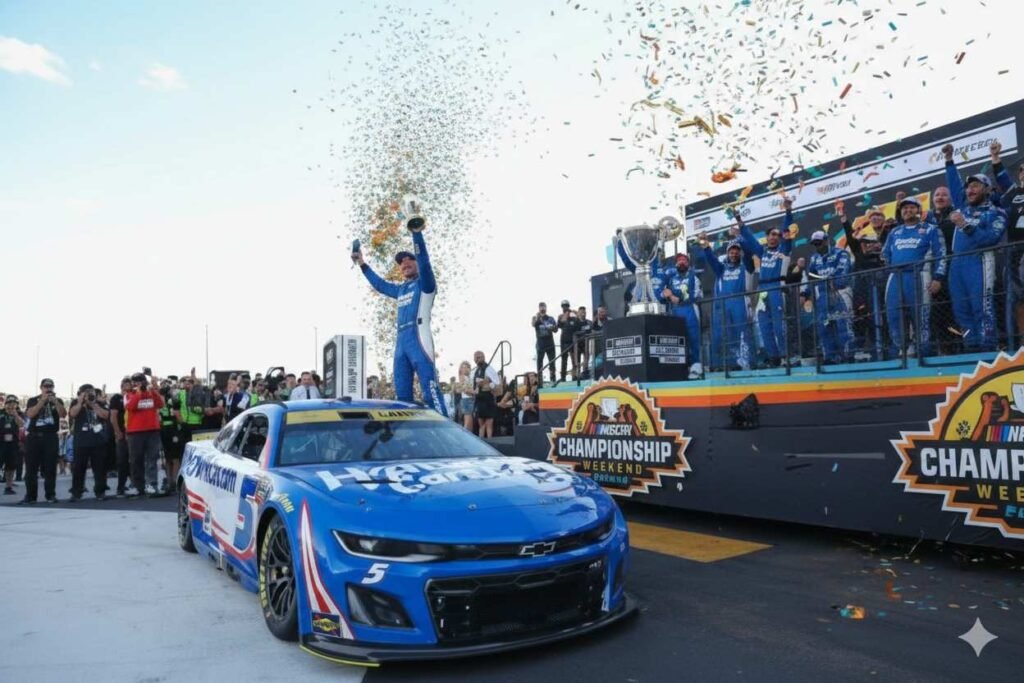
Formula 1 has 20 to 24 races worldwide, with points deciding the World Championship. NASCAR has more races, usually 36, using a playoff system to keep the season exciting.
Race weekends differ F1 spreads practice, qualifying, and the race over three days. NASCAR often finishes qualifying and the race on the same day.
Championship style also varies. F1 focuses on total points, while NASCAR playoffs add suspense. Both test driver skill and team strategy.
Popularity, Fanbase, and Media Coverage
Formula 1 is popular worldwide, especially in Europe and Asia, attracting millions of TV and online viewers. NASCAR has a huge fanbase in the USA, with strong attendance at oval tracks.
Media coverage also differs. F1 uses global broadcasts, streaming, and social media to reach fans. NASCAR focuses on TV, live events, and fan engagement in local communities.
Star drivers boost popularity in both sports. Famous F1 vs. NASCAR racers attract sponsorships, create fan loyalty, and make racing exciting for audiences everywhere.
Formula 1 vs. NASCAR Which Is Better?
Formula 1 is faster, more technical, and has a global fanbase. NASCAR is thrilling with close racing and strong U.S. support. Each sport has unique appeal. F1 focuses on precision and innovation, while NASCAR emphasizes strategy and pack racing.
Ultimately, the “better” sport depends on what fans enjoy speed, technology, or exciting wheel to wheel action.
Conclusion
Formula 1 and NASCAR are two of the most exciting motorsports in the world. Both test driver skill, team strategy, and car performance in unique ways.
F1 focuses on speed, precision, and global competition, while NASCAR delivers close racing and high fan engagement.
Fans can enjoy either sport depending on their preference for technology, racing style, or adrenaline filled action. Both series continue to evolve with new technology, rules, and fan experiences, keeping racing thrilling every season.
FAQs
1. What is the main difference between Formula 1 and NASCAR?
Formula 1 uses open wheel cars and races worldwide on road and street circuits. NASCAR uses stock cars and mostly races on oval tracks in the USA.
2. Which is faster, F1 vs. NASCAR?
Formula 1 cars are faster due to advanced aerodynamics and hybrid engines. NASCAR cars focus on close racing, not top speed.
3. How do the racing formats differ?
F1 has practice, qualifying, and main races over a weekend. NASCAR often combines qualifying and races in one day, with playoffs for championships.
4. Are F1 vs. NASCAR teams similar?
Both require skilled drivers, engineers, and pit crews, but F1 teams invest more in technology and car development.
5. Which sport has more fans worldwide?
Formula 1 has a larger global audience, especially in Europe and Asia. NASCAR is very popular in the United States and has a loyal fanbase.
Leave a Reply