


British settlers introduced cricket to Australia in the mid-19th century, starting the Australia national cricket team. Early matches helped shape Australian cricket history and built strong local competition. This period laid the base for international cricket in Australia.
Australia played its first official Test match in 1877 against England at the Melbourne Cricket Ground. This historic game marked the start of Test cricket dominance and global recognition. It also strengthened the famous Ashes rivalry.
As cricket grew, Australia quickly became known for skill and fighting spirit. Domestic cricket structures improved and produced talented players. These early efforts helped Australia become a powerhouse in world cricket.
Rise to Dominance
The Australia national cricket team became a powerful side during the Sir Don Bradman era, which changed world cricket forever. Bradman’s batting skills helped Australian cricket gain global respect and dominance. Cricket historians often call this period the foundation of Australia’s cricketing success.
Under Bradman’s leadership, the Australian men’s cricket team showed strong discipline and winning mentality. The team performed brilliantly in Test cricket, setting high standards for future players. Australia started to dominate major international cricket series regularly.
This era created a strong cricket culture in Australia and produced many cricket legends. The team’s aggressive playing style became its identity across the world. The history of Australian cricket was firmly shaped during this golden phase.
Post War Rebuilding and the Evolution of the Team
After World War II, the Australia national cricket team focused on rebuilding its strength and balance. Many new players joined the squad, bringing fresh energy to Australian cricket. This period helped restore Australia’s position in international cricket.
During the post-war era, Australia improved its playing style and team structure. Strong leadership and disciplined training became key parts of the team’s success. These changes laid the foundation for future dominance in Test and ODI cricket.
Modernization of Australian Cricket and World Series Impact
In the 1970s, Australian cricket faced big changes with the World Series Cricket. This professional league introduced day-night matches, colored clothing, and TV-friendly formats. It helped modernize the game and attract more fans to cricket.
Many top players joined the series, which improved player salaries and fitness standards. It also brought new coaching techniques and strategies. Australia became stronger and more competitive internationally.
The success of the World Series influenced ODI and Test cricket rules. Innovations like limited overs cricket became popular worldwide. Australia’s cricket structure became more professional, preparing the team for global tournaments.
Golden Years of Australian Cricket Supremacy
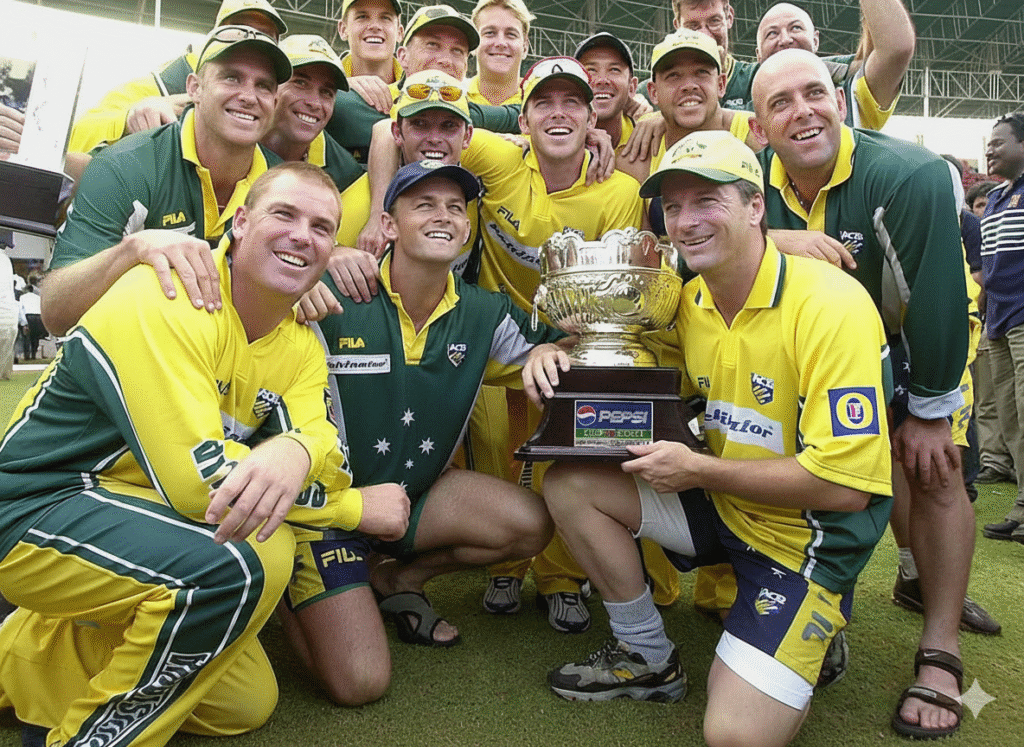
From the 1990s to early 2000s, Australia dominated world cricket with unbeatable players and strong teamwork. Legends like Shane Warne, Ricky Ponting, Glenn McGrath, and Adam Gilchrist led the team to historic wins. Fans remember this period as the golden era of Australian cricket.
During this time, Australia won multiple Cricket World Cups and Champions Trophy titles. Their Test team performance was nearly flawless, breaking many records. Consistent victories made Australia the most feared cricket team globally.
The golden era also focused on youth development and fitness programs. New talent was groomed to continue the winning tradition. This period shaped modern Australian cricket culture and professionalism.
Australia National Cricket Team in the 21st Century

In the 2000s and 2010s, Australia remained one of the top cricket teams in the world. Players like Michael Clarke, David Warner, and Mitchell Starc became key stars. The team focused on balanced batting, fast bowling, and sharp fielding.
Australia continued to perform strongly in Test, ODI, and T20 formats. They won important series and maintained high ICC rankings. The team adapted to modern cricket trends and improved fitness and strategy programs.
The 21st century also saw Australia nurturing young talent through domestic leagues and academies. Players were trained to handle pressure in international tournaments. This period ensured Australia’s legacy and competitiveness continued globally.
Major Controversies and Team Reforms After 2018

In 2018, Australian cricket faced a major ball-tampering scandal that shocked fans worldwide. Key players were suspended, and the team faced global criticism. This incident forced the board to rethink team culture and ethics.
After the scandal, Cricket Australia introduced strict codes of conduct and leadership changes. New captains, coaches, and support staff were appointed to rebuild trust. The team focused on discipline, professionalism, and fair play.
These reforms strengthened Australia’s long-term strategy in international cricket. Players were trained to handle pressure and maintain integrity. Today, the team is known for strong values, young talent, and competitive performance.
Home Grounds, Team Identity, and Playing Colours
Australia plays most of its home matches at famous stadiums like the Melbourne Cricket Ground and Sydney Cricket Ground. These grounds host Test, ODI, and T20 matches with large fan support. They are important for team strategy and home advantage.
The team’s identity is built on aggressive play, teamwork, and consistent performance. Australian cricket is known for its strong fielding, fast bowling, and world-class batsmen. Fans proudly recognize this winning spirit and competitive mindset.
Australia’s team colours are green and gold, representing national pride. Players wear bright uniforms in ODIs and T20Is, making them easily recognizable. These colours also symbolize Australian unity and cricketing tradition
Australia’s Performance Records in All Formats
Australia has set remarkable records in Test, ODI, and T20 cricket. Their fast bowlers and top-order batsmen have broken many world records. The team is known for consistent winning streaks and strong performances.
In Test cricket, Australia has recorded some of the highest team totals and best individual scores. Legends like Don Bradman and Steve Smith hold key records. Their bowling attack often dominates international opponents.
In limited-overs cricket, Australia has excelled in ODIs and T20Is, winning multiple World Cups and series titles. Players like Glenn McGrath and David Warner lead the charts. These records show Australia’s strength and versatility across formats.
ICC Tournaments, Trophies, and Historic Milestones

Australia has won multiple ICC Cricket World Cups, making them one of the most successful teams. They also excel in ICC Champions Trophy and T20 World Cup tournaments. These wins highlight their global cricket dominance.
The team has achieved many historic milestones in both batting and bowling. Records include highest team scores, fastest centuries, and best bowling figures. These achievements inspire new players and maintain Australia’s cricketing legacy.
Australia’s success in ICC events shows their consistency and strong team culture. Winning trophies across formats proves their adaptability and skill at the international level. Fans continue to celebrate their achievements and world-class performances.
Conclusion
The Australia national cricket team has a rich history of success in Test, ODI, and T20 cricket. Their golden eras, legendary players, and ICC trophies show their dominance in world cricket.
Despite challenges like controversies and team rebuilding phases, Australia remains a top-ranked cricketing nation. Modern players continue to inspire fans with remarkable performances and records.
With strong coaching staff, national selection strategies, and talented young players, the future of Australian cricket looks bright. Their legacy of excellence ensures they will remain a force in international cricket for years to come.
Leave a Reply