
Players can face serious injury or even death in certain high-risk activities, which are known as dangerous sports. These extreme sports often involve speed, height, or strong physical contact. Because of this, the injury rate in such games is much higher than normal sports.
Many dangerous contact sports include heavy collisions and concussion risk. For example, combat sports and adventure sports can lead to broken bones or head trauma. As a result, these life-threatening games need proper safety rules and training.
Sports injury statistics show that high-risk sports have more emergency cases every year. Research on sports accidents highlights brain injuries and spinal damage as common risks. Therefore, understanding risk factors helps athletes stay safer while playing extreme activities.
How Injury Rates Determine the Most Dangerous Sports?
Injury rates help experts decide which dangerous sports is truly high risk. Doctors study sports injury statistics to measure broken bones, head trauma, and long-term damage. For example, Ultimate Fighting Championship (UFC) fights often report cuts and concussions due to intense physical contact.
Head injuries and concussion risk are major factors in ranking high-risk activities. In National Football League (NFL) games, many players have suffered brain injuries linked to repeated tackles. Because of this, American football is often listed among the most dangerous contact sports.
Fatal accidents also affect the ranking of extreme sports. For instance, in Isle of Man TT, multiple riders have lost their lives due to high-speed crashes. Therefore, fatal sports accidents and overall injury comparison data clearly show which sports carry the highest risk.
Top Dangerous Sports Ranked by Real Injury Cases
Boxing – Brain Injury & Long-Term Damage

Boxing is one of the most dangerous contact sports because of repeated head punches. The risk of brain injury and concussion damage is very high in this combat sport. For example, Muhammad Ali developed Parkinson’s disease, and many experts linked it to repeated head trauma in boxing.
American Football – Concussion & CTE Risk
American football is known for strong tackles and heavy collisions. This creates serious concussion risk and long-term CTE brain injury problems. For instance, Damar Hamlin suffered cardiac arrest during an NFL game, showing how high-impact sports can be life-threatening.
Motor Racing -High-Speed Fatal Accidents
Motor racing is a high-speed extreme sport where crash impact can be deadly. Drivers face fire risk, car collisions, and severe injuries at high speeds. A real example is Ayrton Senna, who tragically died in a Formula 1 crash, proving how dangerous racing can be.
Ice Hockey – Collision & Skull Injury Risk
Ice hockey is a fast-moving sport with strong body checks. Because of this, sports injury statistics show high rates of broken bones and head injuries. For example, Clint Malarchuk suffered a severe neck injury during a match, which became one of the most shocking accidents in hockey history.
Mixed Martial Arts (MMA) – Full Contact Combat Risk
MMA is a brutal high-risk sport with punches, kicks, and submissions. Fighters often face broken bones and serious facial injuries. For example, Anderson Silva suffered a dramatic leg fracture during a fight, showing how extreme this combat sport can be.
Rugby – Heavy Collision & Spinal Injury Risk
Rugby is a full-contact dangerous sport with no hard protective gear. Players face serious spinal injury risk and repeated concussion damage. For example, Ryan Jones later revealed he was diagnosed with early-onset dementia linked to repeated head trauma in rugby.
Bull Riding – Rodeo Injury & Fatal Accident Risk
Bull riding is one of the most intense extreme sports because riders sit on a wild animal. The fatal sports accident rate is high due to falls and trampling. For instance, Lane Frost tragically died after being injured by a bull during a rodeo event.
Rock Climbing – Fall & Equipment Failure Danger
Rock climbing is a popular high-risk activity that involves height and balance. A small mistake can lead to deadly falls, making it a life-threatening adventure sport. A real case is John Bachar, who died in a climbing fall, showing the serious risks of this sport.
Big Wave Surfing – Drowning & Ocean Hazard Risk
Big wave surfing is an extreme water sport with strong currents and massive waves. Surfers face drowning risk and serious head injuries from underwater impact. For example, Sion Milosky died while surfing large waves, highlighting the dangers of ocean sports.
Base Jumping – Highest Fatality Extreme Sport
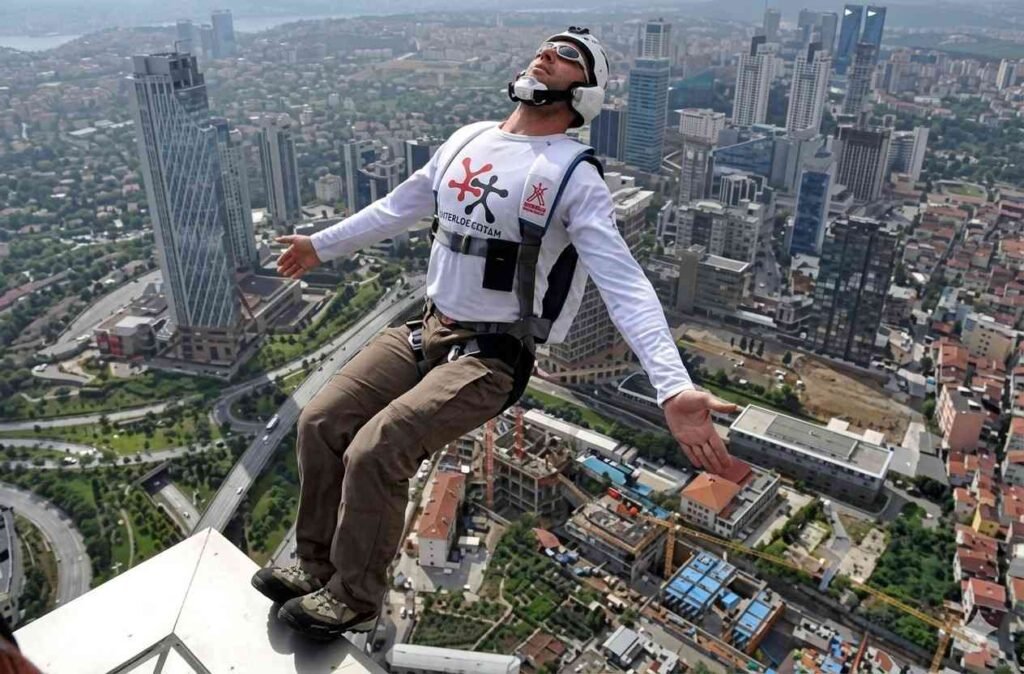
Base jumping is often called the most dangerous extreme sport in the world. Jumpers leap from buildings or cliffs, facing high fatality rate statistics. A known example is Dean Potter, who died during a wingsuit jump accident, proving how risky this sport can be.
Are They Really High Risk?
Some dangerous Olympic sports may look safe on TV, but they carry serious injury risk. Many events have high Olympic injury rate due to speed, height, or hard impact. For example, in the 2010 Winter Olympics, Nodar Kumaritashvili tragically died during a luge training run, showing how risky winter sports accidents can be.
Combat events in the Olympics also have strong concussion risk and head trauma. Boxing and taekwondo are considered high-risk contact sports because punches and kicks target the upper body. A real case is Magomed Abdusalamov, who suffered severe brain injury after a professional fight, proving how dangerous combat sports can be.
Gymnastics is another event with hidden sports injury statistics and spinal injury risk. Athletes perform flips and land with high force, which can cause serious damage. For instance, Samantha Cerio suffered a shocking leg injury during a vault routine, highlighting the danger in this extreme athletic sport.
Why Athletes Participate in Dangerous Sports?

Many athletes choose dangerous sports because they enjoy the strong adrenaline rush. These high-risk activities give excitement that normal games cannot provide. For example, Travis Pastrana is known for performing risky stunts in motocross, showing the thrill-seeking mindset.
Some players have a natural risk-taking personality and love extreme challenges. In many extreme sports, athletes push their physical and mental limits to feel achievement. For instance, Alex Honnold climbed huge cliffs without ropes, proving how strong the thrill factor can be.
Money and fame also attract athletes to high-risk sports careers. Sponsorship deals and social media popularity increase in adventure and combat sports. For example, Conor McGregor earned millions through MMA fights and brand endorsements despite the serious injury risk.
Safety Measures in Dangerous Sports
Safety rules are very important in dangerous sports to reduce serious injuries. Athletes must wear proper protective equipment like helmets, gloves, and body pads. For example, after head injury cases in the National Football League, stricter concussion protocols were introduced to protect players.
Training and medical support also lower the sports injury rate in high-risk activities. Many extreme sports now require certified coaches and emergency teams on site. In Formula One, advanced car safety systems were added after fatal crashes to improve driver protection.
Governing bodies create strong sports safety regulations to control fatal accidents. They update rules, limit dangerous moves, and improve equipment quality. For instance, World Rugby changed tackle laws to reduce concussion risk in professional matches.
Most Dangerous Sports for Kids – What Parents Should Know?
Some dangerous sports for kids have a higher youth sports injury rate than others. Contact games like football and hockey can cause broken bones and concussion risk. For example, American Academy of Pediatrics has warned that repeated head impacts in youth football can affect brain development.
Extreme activities also increase child safety in sports concerns. Skateboarding, BMX riding, and gymnastics may lead to falls and spinal injuries. Because young bodies are still growing, high-risk youth activities can cause long-term damage if safety rules are ignored.
Parents should focus on injury prevention tips and proper protective gear. Helmets, mouthguards, and trained coaches reduce the risk in contact sports. Therefore, understanding sports risk factors helps families choose safer options while still encouraging physical activity.
Conclusion
Dangerous sports attract athletes because of thrill, passion, and competition. However, these high-risk activities come with serious injury and fatal accident risk. From combat games to extreme adventure sports, the sports injury rate is much higher than normal activities.
Real cases from events like the Isle of Man TT and leagues such as the National Football League show how serious these risks can be. Concussion damage, spinal injuries, and high-speed crashes prove that safety should always come first.
In the end, understanding dangerous sports helps athletes and parents make smarter decisions. With proper protective equipment, strict rules, and medical support, injury risk can be reduced. Awareness and prevention are the key to enjoying extreme sports safely.
FAQs
Q1: What are dangerous sports?
Dangerous sports are high-risk activities where players face serious injury or death. These include extreme sports and heavy contact sports with high concussion risk. For example, events like the Isle of Man TT show how speed increases fatal accident danger.
Q2: Which sport has the highest fatality rate?
Base jumping and high-speed motor racing often have the highest fatality rate statistics. Falls from height and crash impact make these extreme sports very risky. Reports from races like the Isle of Man TT highlight repeated deadly accidents over the years.
Q3: Why do athletes still play dangerous sports?
Many athletes enjoy the strong adrenaline rush and thrill factor. Some also earn fame and money from high-risk sports careers. For example, fighters in the Ultimate Fighting Championship compete despite injury risk because of global popularity and rewards.
Q4: How can injury risk be reduced in dangerous sports?
Using proper protective equipment and following safety rules can lower the sports injury rate. Organizations like the International Olympic Committee improve regulations to protect athletes. Training, medical teams, and awareness also reduce serious accidents.
Leave a Reply