
The Winter Olympics are a major international sports event. Athletes from many countries compete in snow and ice sports. The Games take place every four years. Fans from all over the world watch the Winter Olympics with great interest.
Moreover, the Winter Olympics promote sportsmanship and global unity. They also help winter sports grow worldwide.
History of the Winter Olympics
The winter Olympics started in 1924 in Chamonix, France. At first, only a few countries took part. However, interest in winter sports grew quickly.
Over time, more nations joined the Olympics. New sports were added. As a result, the Games became truly global.
Why the Winter Olympics Are Important
The Olympics matter for several reasons. First, athletes get a global stage. Second, winter sports gain popularity. Third, host countries receive worldwide attention.
Therefore, the Olympics support both sports and culture.
Winter Olympics Sports List
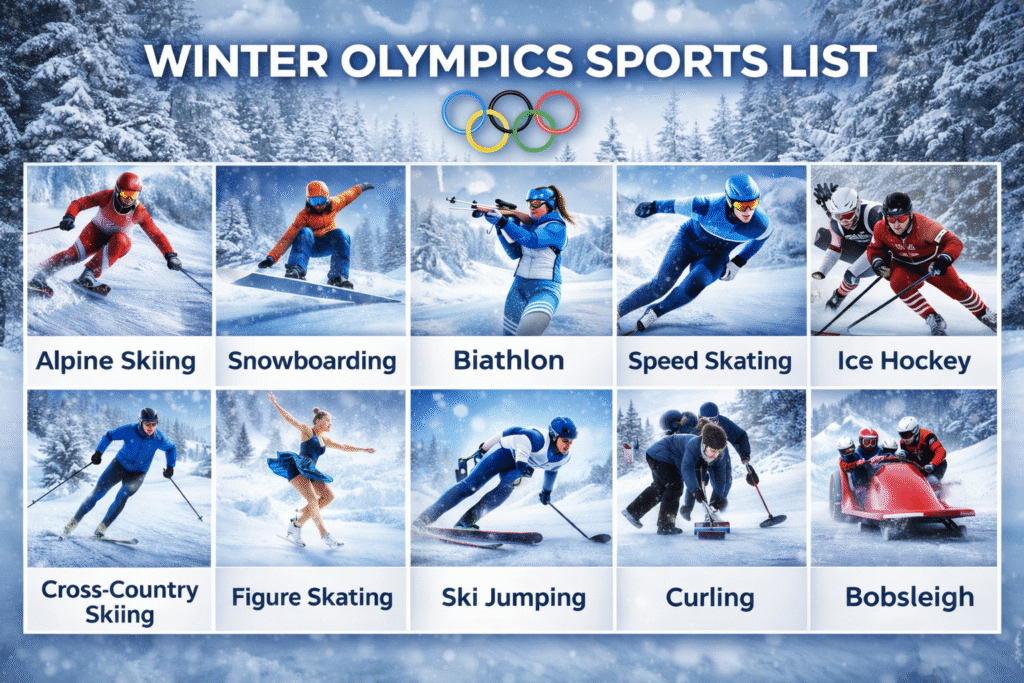
This include many exciting sports. These sports test speed, strength, balance, and skill.
Popular Winter Sports
- Alpine Skiing
- Cross-Country Skiing
- Figure Skating
- Ice Hockey
- Speed Skating
- Snowboarding
- Bobsleigh
- Curling
In addition, new events are added to keep the Games fresh.
Olympics Venues and Host Cities
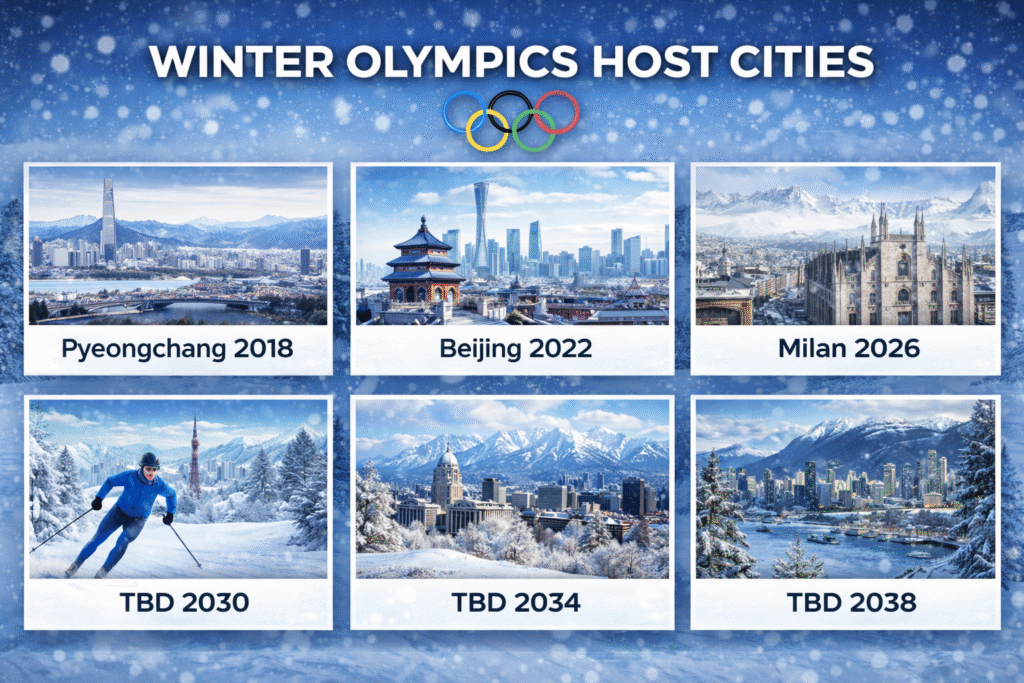
The Olympics are hosted in cold regions. Mountains and snowy areas are often used.
Famous Host Cities
- Chamonix, France
- Innsbruck, Austria
- Vancouver, Canada
- Sochi, Russia
- PyeongChang, South Korea
- Beijing, China
As a result, every Winter Olympics has a unique setting.
Upcoming Sports Event
The upcoming Winter Olympics are expected to feature exciting events such as alpine skiing, figure skating, ice hockey, and speed skating.
In addition, snowboarding, biathlon, and cross-country skiing will attract major global attention. Several new talents are also expected to emerge alongside experienced Olympic champions.
Overall, the event promises thrilling competition, world-class performances, and unforgettable winter sports action.
Famous Winter Olympics Athletes
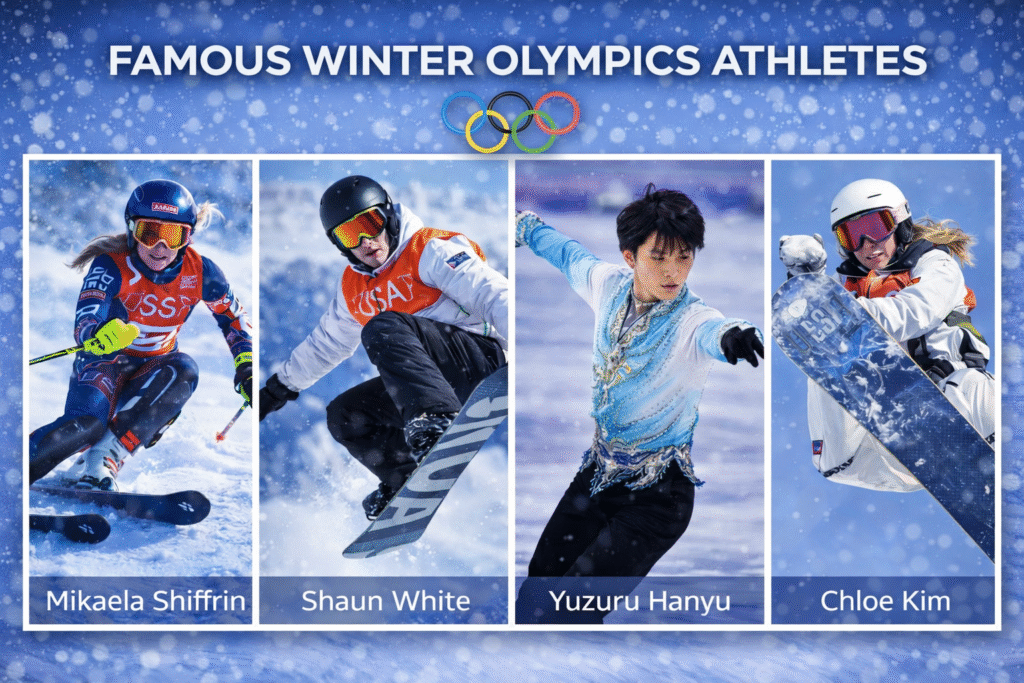
Many great athletes have competed in this Olympics.
Well-Known Athletes
- Mikaela Shiffrin (Alpine Skiing)
- Yuna Kim (Figure Skating)
- Shaun White (Snowboarding)
- Ole Einar Bjørndalen (Biathlon)
These athletes inspired millions of fans.
Winter Olympics and Global Impact
The Olympics have a strong global impact. Tourism increases in host countries. Sports facilities improve. Local economies benefit.
Moreover, the Games bring people together. Fans from different cultures celebrate sports as one.
Media and Broadcasting

These are shown on TV and online platforms. Fans watch live events, highlights, and interviews.
As a result, the Winter Olympics reach a worldwide audience.
Future of the Winter Olympics
The Olympics continue to evolve. Organizers focus on sustainability and innovation. New technology improves the fan experience.
As a result, the Games remain relevant for future generations.
Sustainability and Environmental Efforts
The Olympics now place strong focus on sustainability. Organizers plan venues carefully to reduce environmental damage. Renewable energy is used where possible. Reusable infrastructure is preferred.
Moreover, host cities are encouraged to protect mountains, forests, and wildlife. Because of these steps, the Winter Olympics aim to balance sports excellence with environmental care.
Technology and Innovation in Olympics
Technology plays an important role in the Olympics. Timing systems ensure accurate results. Video replays help officials make fair decisions.
In addition, high-definition broadcasting improves the viewing experience. Fans enjoy slow-motion replays and expert analysis. As a result, engagement with the Olympics continues to grow.
Youth Development and Inspiration
The Olympics inspire young athletes around the world. Many children start winter sports after watching the Games. Countries invest in training programs and sports academies.
Furthermore, role models from the Olympics motivate the next generation. Therefore, the event supports long-term sports development.
Cultural Significance of the Olympics
The Olympics are not only about sports. They also celebrate culture. Opening and closing ceremonies showcase the host nation’s traditions.
At the same time, athletes from different countries interact and share experiences. As a result, the Olympics promote peace and understanding.
Challenges Faced by the Olympics
This Olympics face several challenges. Hosting costs are high. Climate change affects snowfall in some regions.
However, organizers respond with smart planning. Shared venues and artificial snow solutions are used. Therefore, the Games continue successfully.
Future of the Olympics
The future of the Olympics looks promising. More sustainable hosting models are planned. Digital platforms will attract younger audiences.
Moreover, new sports may be added to keep the Games exciting. As a result, the Winter Olympics will continue to evolve.
Final Thoughts
The Winter Olympics represent dedication, skill, and unity. Athletes compete at the highest level. Fans enjoy unforgettable moments.
With rich history, global impact, and continuous improvement, the Olympics remain one of the world’s most respected sporting events.
Leave a Reply